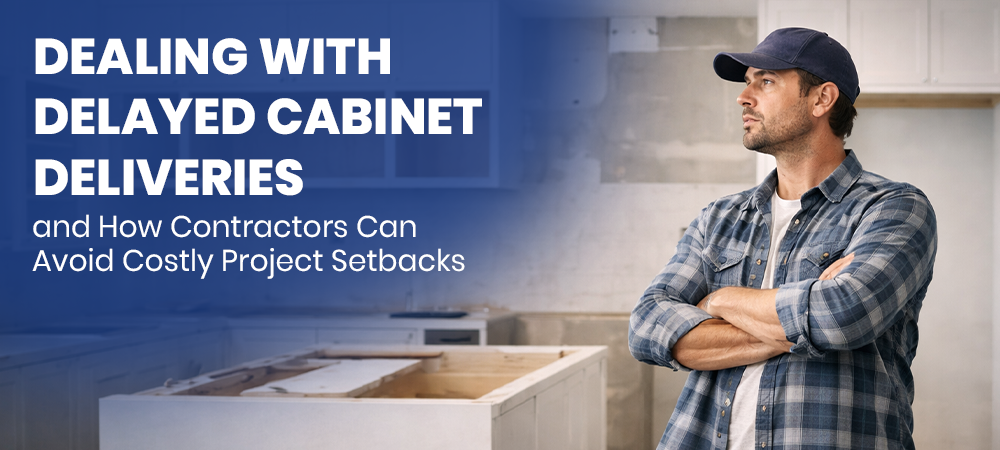
Dealing with Delayed Cabinet Deliveries and How Contractors Can Avoid Costly Project Setbacks
Cabinet delivery delays:
- Disrupt entire build schedules
- Idle crews
- Increase labor costs
- Put client relationships at risk
Most delays come down to supplier issues like:
- Backorders
- Inconsistent inventory
- Poor logistics
- Incomplete orders
The impact is always the same: cascading trade delays, lost revenue from downtime, and tighter, more stressful project timelines.
While delays can sometimes be managed with strong communication and schedule adjustments, the most effective solution is prevention. Contractors can avoid most setbacks by working with partners that offer:
- Large, in-stock inventory ready to ship
- Fast, predictable delivery timelines
- Complete cabinet packages
- Manufacturer-direct supply chains
- Locked-in plans before ordering to prevent last-minute changes
Dealing with Delayed Cabinet Deliveries & Avoiding Setbacks
Cabinet delivery delays disrupt entire build schedules, increase labor costs, and put hard-earned client trust at risk. For contractors, the real issue isn't just waiting on materials. It's the ripple effect: stalled trades, idle crews, and compressed timelines that eat into profit.
This guide explains why cabinet delays occur, how they affect your projects, and how to avoid them by choosing the right supplier, like Savannah Cabinetry. Keep your jobs moving with:
- Speed
- Reliability
- Consistent inventory
Why Do Delays Happen in Cabinet Deliveries?
Most contractors assume delays are just "part of the industry," but that's not the full picture. Most cabinet delivery issues stem from supplier limitations. Common causes include:
- Incomplete orders
- Backordered or inconsistent inventory
- Poor shipping and logistics coordination
- Last-minute design or measurement changes
Suppliers without the systems or inventory to support fast, complete fulfillment — like those lacking in-stock kitchen cabinets — often create avoidable delays
How Delivery Delays Impact Your Projects
A delayed cabinet shipment doesn't stay isolated to one phase of a build. It spreads across your entire schedule.
- Schedule disruptions across multiple trades
- Crew downtime that leads to lost revenue
- Client frustration and trust issues
- Overlapping project delays compound workload problems
One delayed delivery can throw off your entire pipeline, not just a single job.
What to Do When Cabinets Are Delayed
Even with strong planning, delays can still happen. What matters is how you respond. To minimize damage:
- Communicate early and clearly with clients
- Adjust schedules to continue prep or demo work where possible
- Confirm updated timelines directly with your supplier
- Check for partial shipment or staged delivery options
Goal: Keep crews productive, protect client relationships, and reduce idle time wherever possible.
Working with contractor-focused suppliers like Savannah Cabinets for contractors can improve response times and flexibility.
How to Avoid Cabinet Delivery Delays
Avoiding delays is a supplier strategy.
1. Choose Suppliers with Real Inventory
Problem: Backorders stall projects before they start. Savannah Cabinetry solves this with:
- 200,000+ cabinets in active inventory
- Ready-to-ship stock that eliminates manufacturing wait times
Takeaway: Inventory equals reliability. If it's not in stock, it's not predictable.
2. Prioritize Speed & Delivery Consistency
Problem: Unpredictable timelines make scheduling impossible. Savannah Cabinetry provides:
- Fast 3-day delivery on stocked products
- Predictable fulfillment windows that contractors can plan around
Takeaway: Faster, consistent delivery keeps job schedules stable.
3. Order Complete Packages
Problem: Missing components stop installation mid-job. Savannah Cabinetry includes:
- Trim, fillers, and toe-kicks included in orders
- Extra pieces supplied for on-site adjustments
Takeaway: Complete orders to eliminate jobsite interruptions.
4. Work with Manufacturer-Direct Suppliers
Problem: Middlemen create delays, miscommunication, and markup layers. Savannah Cabinetry offers:
- Manufacturer-direct pricing
- Streamlined supply chain with fewer delays
- Better margins for contractors
Takeaway: Fewer layers = faster delivery and stronger profitability.
5. Finalize Plans Before Ordering
Even the best supplier can't prevent changing orders from causing delays. Contractors should:
- Lock measurements, layouts, and materials before ordering
- Avoid last-minute design changes
- Confirm all selections upfront
Takeaway: Planning prevents avoidable delays.
The True Cost of Delays
| Issue | Impact |
|---|---|
| Late delivery | Project delays |
| Crew downtime | Lost revenue |
| Rescheduling trades | Increased costs |
| Client dissatisfaction | Reputation risk |
What looks like a "cheaper" supplier often becomes the most expensive decision once delays hit your schedule.
Signs Your Supplier May Cause Delays
- Limited or inconsistent inventory
- Vague or shifting delivery timelines
- Missing components in quotes
- Heavy reliance on multiple middlemen
Most contractors switch suppliers after repeated delays to disrupt multiple projects.
Final Takeaways
Cabinet delays are expensive. The difference between staying on schedule and losing profit often comes down to one decision: your supplier. Savannah Cabinetry serves contractors who need speed, consistency, and real inventory.
FAQs
-
How long should cabinet delivery take?
It depends on inventory and supplier model, but stocked, ready-to-ship systems can deliver in days.
-
What causes most cabinet delivery delays?
Backorders, incomplete inventory, poor logistics coordination, and last-minute order changes.
-
How can I avoid cabinet delivery delays on my projects?
Work with suppliers that maintain large in-stock inventory, offer fast shipping, and provide complete packages.
-
Why is inventory important when choosing a cabinet supplier?
Inventory determines whether a supplier can fulfill orders immediately or relies on manufacturing lead times.
-
Are faster cabinet deliveries more expensive?
Not necessarily, manufacturer-direct suppliers often reduce costs while improving speed.
-
What should I check before ordering cabinets?
Confirm measurements, layouts, and finish selections, and verify that you included all components.
-
Can I start installation if only part of the order arrives?
It's possible, but often inefficient and risky if critical components are missing.
-
How do cabinet delays affect overall project timelines?
They cascade across trades, causing scheduling conflicts and extended project completion dates.
-
What are the signs of an unreliable cabinet supplier?
Unclear timelines, frequent backorders, and incomplete shipments.
-
Why do contractors prefer complete cabinet packages?
They reduce missing parts, simplify scheduling, and keep installation moving without interruptions.